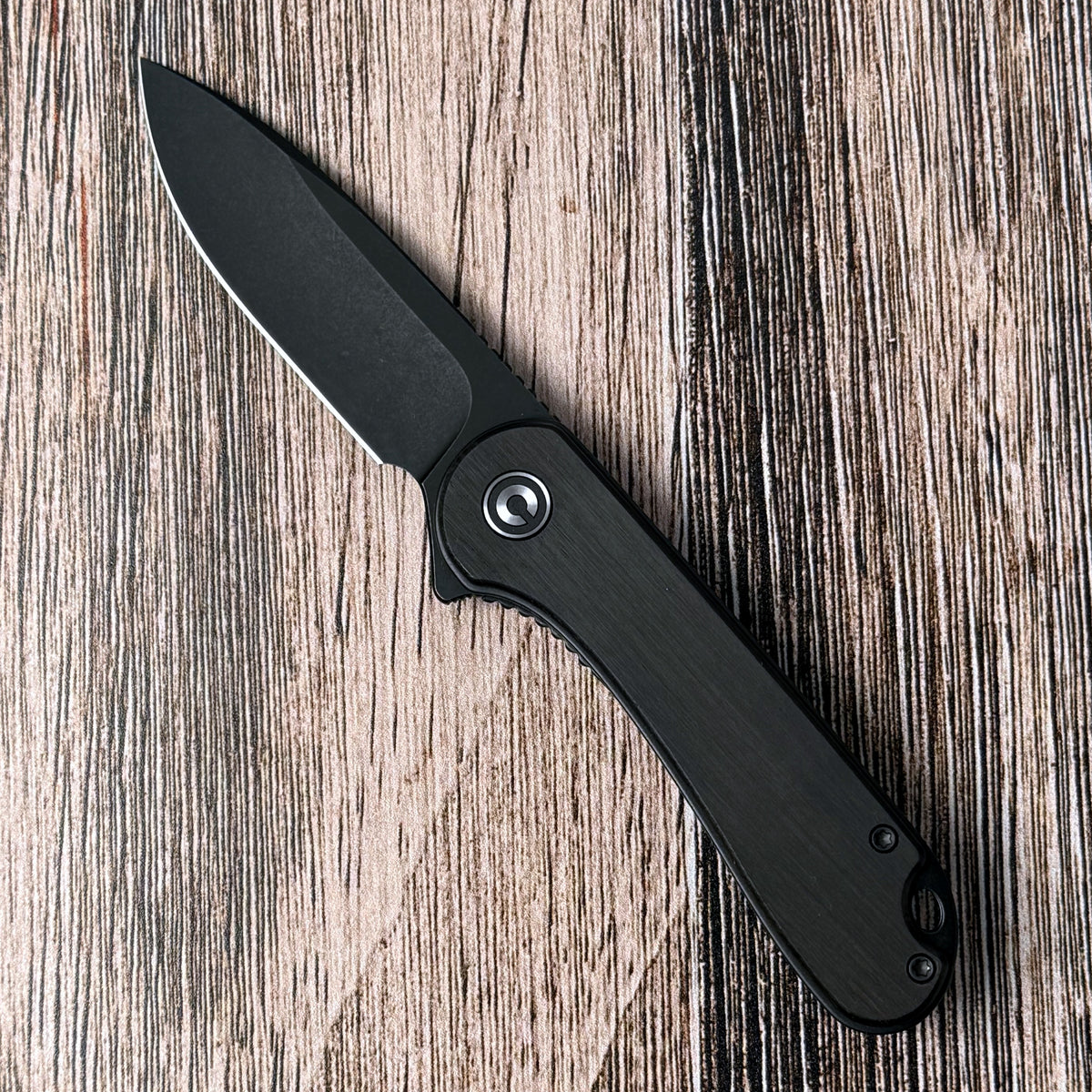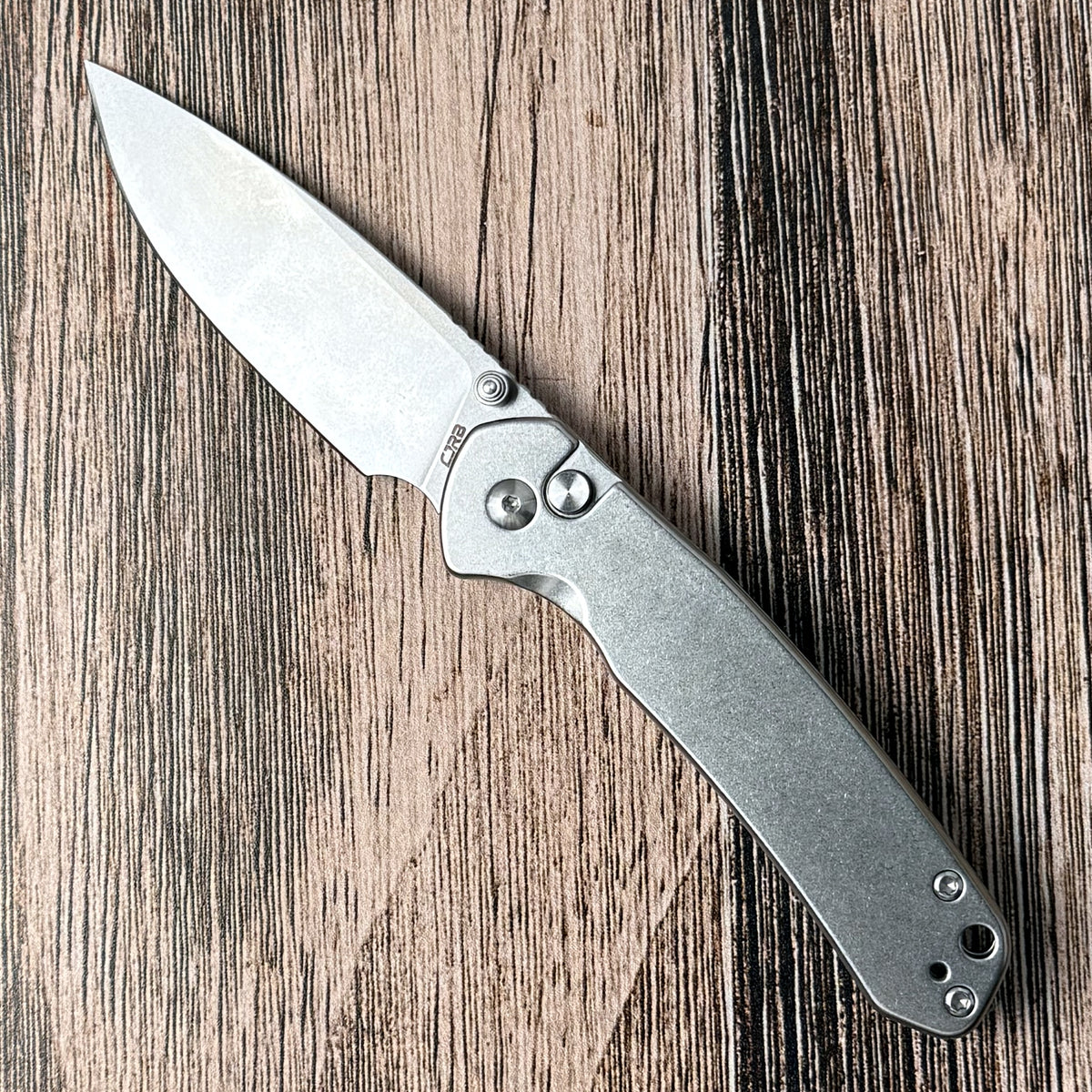
The Civivi Elementum vs. CJRB Pyrite decision starts with how you want your everyday knife to operate. Choose the ebony-wood Elementum if you want a lighter knife with a rear flipper and liner lock. Choose the steel-handle Pyrite if you prefer thumb studs, a button lock, and a reversible pocket clip—and are comfortable carrying more weight.
This guide compares the original D2, ebony-wood Elementum with a black stonewashed blade and the AR-RPM9, steel-handle, drop-point Pyrite sold by Mighty Oak. Other Elementum and Pyrite versions can have different locks, steels, handles, and dimensions. These recommendations interpret published specifications; they are not hands-on test results.
Elementum vs. Pyrite at a glance
| Feature | Civivi Elementum | CJRB Pyrite |
|---|---|---|
| Blade steel | D2 | AR-RPM9 |
| Blade length | 2.96 inches | 3.11 inches |
| Closed length | 4.03 inches | 4.2 inches |
| Weight | 2.66 oz / 75.4 g | 3.7 oz / 105 g |
| Handle | Black ebony wood | Steel |
| Opening control | Rear flipper | Thumb studs |
| Lock | Liner lock | Button lock |
| Pocket clip | Tip-up, right carry | Reversible deep carry |
Sources: CIVIVI's C907W specifications and Artisan Cutlery's steel-handle Pyrite specifications. Published manufacturer and retail figures differ slightly; the table uses manufacturer figures, not measurements of a test sample.
Start with the opening and closing routine
Elementum: rear flipper and liner lock
The flipper gives your index finger a dedicated opening control. To close a liner-lock knife, you move the liner clear of the blade before folding it. Keep fingers clear of the closing edge and use a deliberate, controlled motion.
If a rear flipper is already your preferred opening method, the Civivi Elementum in ebony wood is the more direct match here. Its appeal is a familiar operating routine paired with a compact wood-handled design.
Pyrite: thumb studs and button lock
The Pyrite puts the opening control on the blade and the lock release on the handle. That changes the closing routine: you press the button to release the lock instead of reaching for a liner inside the handle. Keep the blade's path clear and control its movement.
The steel-handle CJRB Pyrite makes sense when that button-operated release is a priority. Button location alone does not establish which knife is safer or stronger. For a broader explanation, see our guide to pocket knife lock types.
Think about your pocket before your cutting list
These are close in overall size, so the small blade-length difference should rarely be the first deciding factor for routine package opening or other light cutting. Your pocket setup may settle the choice sooner.
- For light trousers or an already crowded pocket: the Elementum's lower listed weight is a useful advantage.
- For a preference for metal handles: the Pyrite offers that construction, with a corresponding increase in carried weight.
- For left-side clip placement: the Pyrite's reversible clip gives you an option the C907W's right-carry clip does not. Clip placement and lock operation are separate considerations.
Consider where your phone, keys, and wallet already sit. A knife that fits the space you actually have is a better purchase than one selected on blade length alone.
Wood, steel, and the care routine
The Elementum's ebony scales and dark blade create a different look from the Pyrite's stonewashed metal handle. Choose the finish you want to see and handle every day; material preference does not need a performance claim to justify it.
The blade-steel names also should not stand in for a cutting test. Edge geometry, sharpening, heat treatment, and the material being cut all affect results. This comparison does not rank edge retention or promise a specific interval between sharpenings.
For either knife, remove residue after use, dry it before storage, and keep the pivot and lock area free of debris. Follow the maker's care instructions. Our pocket knife cleaning and maintenance guide explains a routine you can build into normal use.
Three questions to ask before choosing
- Which opening control do I prefer? Pick the Elementum for a rear flipper or the Pyrite for thumb studs.
- Will I notice extra pocket weight? Favor the Elementum when minimizing carry weight matters most.
- Do I specifically want a button release or reversible clip? Those are clear reasons to favor this Pyrite configuration.
Which one should you choose?
Choose the Civivi Elementum for its lighter carry, ebony-wood handle, and flipper-and-liner-lock combination. Choose the CJRB Pyrite for its button lock, thumb studs, steel handle, and reversible clip. Match the exact version to your preferred daily routine, then check the current product page before ordering.
Shop the picks
The two configurations compared in this guide.