Every pocket knife — even the one you spent $200 on — eventually goes dull. And once it does, most people do one of two things: they keep using it (badly), or they shove it in a drawer and buy a new one. Neither is necessary. Sharpening a pocket knife is one of the easiest skills in EDC, and once you learn it, you'll never carry a dull blade again.
This is our complete 2026 guide to sharpening an EDC knife, from the cheapest $20 sharpener to a proper bench stone setup. We'll cover what actually matters, what doesn't, and which sharpeners we recommend across every budget.
Why You Should Sharpen Your Own Knife
A sharp knife is a safe knife. Dull blades slip, take more force to cut, and cause more accidents than sharp ones. They also ruin the experience of carrying a nice knife. If your $80 EDC takes three passes to slice an apple, you might as well be carrying a butter knife.
Beyond safety, sharpening your own knife saves money, builds a useful skill, and makes you respect the tool more. A blade you've sharpened yourself feels different in the hand — sharper, in every sense.
How a Knife Edge Actually Works
Skip this section if you just want product recommendations. But if you want to sharpen well, it helps to understand what you're doing.
A knife edge is just two flat surfaces (called bevels) meeting at an angle. The smaller that angle, the sharper the knife — but also the more fragile the edge. Most EDC pocket knives are sharpened somewhere between 17 and 22 degrees per side. That's the sweet spot for daily use: sharp enough to slice cleanly, tough enough to handle cardboard, rope, and the occasional staple without chipping.
When a knife "goes dull," the edge isn't usually missing metal — it's rolled, bent, or microscopically chipped. Sharpening removes a tiny bit of steel to restore a fresh, straight apex. Honing (with a strop or ceramic rod) just realigns an edge that's still sharp underneath. Most "dull" EDC knives need honing, not full sharpening.
What You Actually Need to Sharpen a Pocket Knife
You don't need a full bench setup to keep an EDC knife sharp. Here's the honest hierarchy of what works:
- Bare minimum: One double-sided diamond plate or sharpening stone. That's it.
- Better: A diamond plate plus a leather strop for finishing.
- Best: Coarse, fine, and extra-fine stones, plus a strop and a guided angle tool.
If you carry one EDC knife, the bare-minimum setup will keep it shaving sharp for years. Don't overbuy your first sharpener.
The Best Pocket Knife Sharpeners for 2026
These are the sharpeners we recommend, all in stock at Mighty Oak Supply Co. and backed by our 30-day satisfaction guarantee.
1. DMT Double Sided Diafold Sharpener — Best Overall
Grits: Fine (600) and Coarse (325)
Price: $55
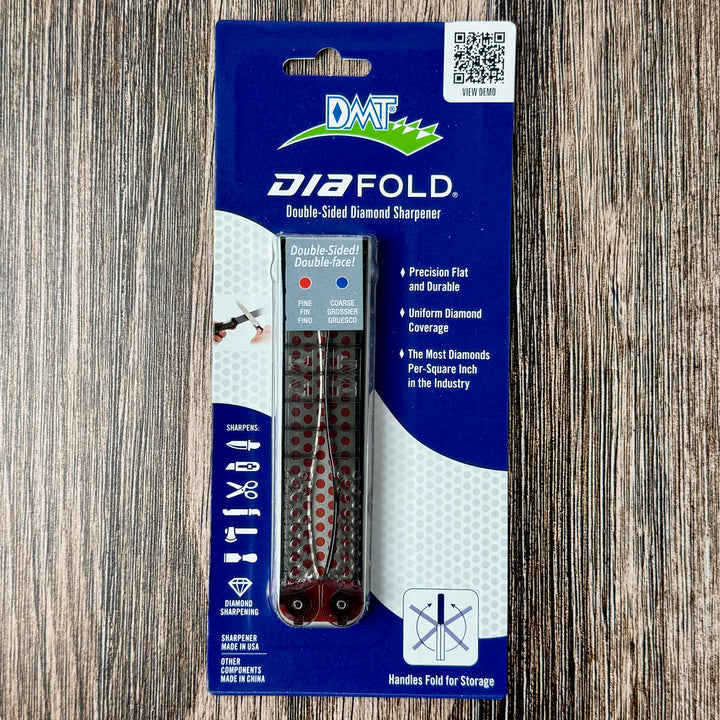
If we could only recommend one knife sharpener, this is it. The DMT Double Sided Diafold Sharpener uses real diamond-coated plates — they cut faster than any oil or water stone, never need flattening, and last basically forever. The folding design makes it pocketable enough to throw in a backpack or glovebox, and the dual grit covers everything from heavy reprofiling to a final polish.
Diamond plates have one big advantage over traditional stones: they don't dish out. A water stone wears unevenly and eventually needs to be re-flattened. A DMT plate stays flat for life.
Best for: Anyone who wants one sharpener that does it all, forever.
2. Pride Abrasive 1000 Grit Water Stone — Best for a Polished Edge
Price: $60
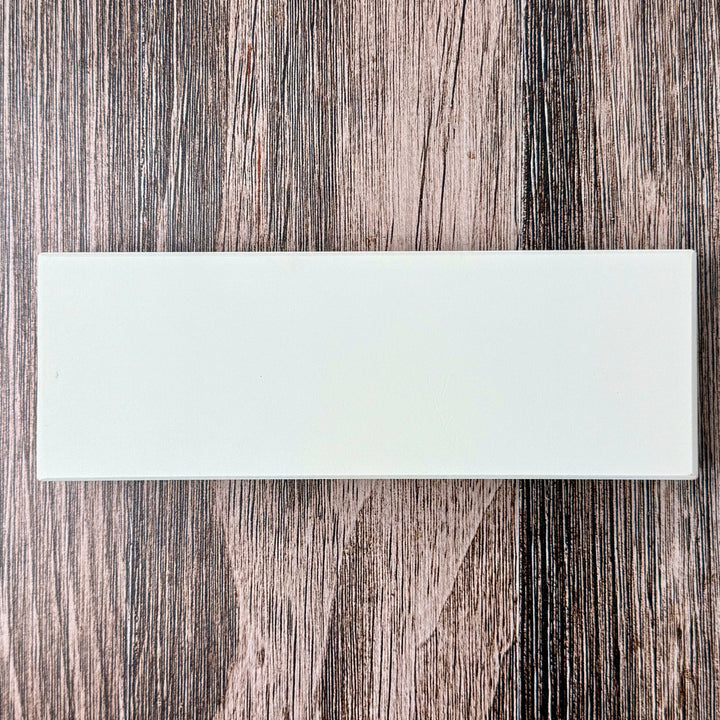
If you want a finer, polished finish on your edge, the Pride Abrasive 1000 Grit Water Stone is the easy pick. 1000 grit is the gold-standard finishing grit for EDC knives — it leaves an edge that shaves arm hair, slices paper cleanly, and still bites into rope and cardboard.
Water stones cut a little slower than diamond plates but leave a noticeably nicer finish. Soak it for 5 minutes before use, then keep the surface wet while sharpening. Pair it with a coarser diamond plate for a complete two-stone setup.
Best for: Knife enthusiasts who want a refined edge and don't mind the extra five minutes.
3. CRKT Knife Maintenance Tool — Best Field Sharpener
Price: $40
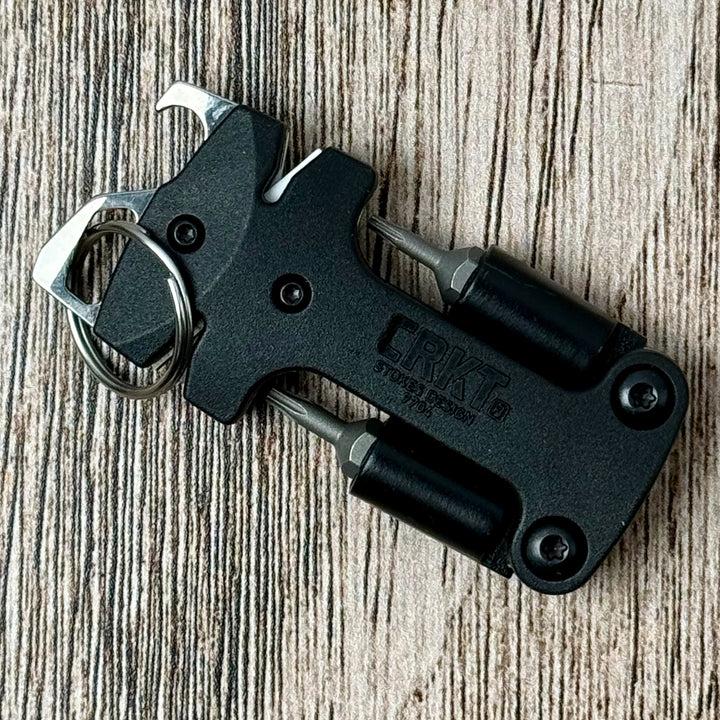
The CRKT Knife Maintenance Tool is the sharpener you keep in a backpack, tackle box, or kitchen drawer for fast touch-ups. It combines a diamond rod, a ceramic rod, and a built-in pivot driver for tightening loose knife screws — all in a tool the size of a Sharpie.
It's not a replacement for a proper stone, but it's perfect for "this knife stopped slicing tomatoes" emergencies. Two minutes with the ceramic rod brings most EDC blades back to working sharpness.
Best for: Quick touch-ups, travel, and anyone who'd rather hone than reprofile.
4. Wazoo Survival Gear Viking Whetstone Pendant — Best Always-On-You Option
Price: $55
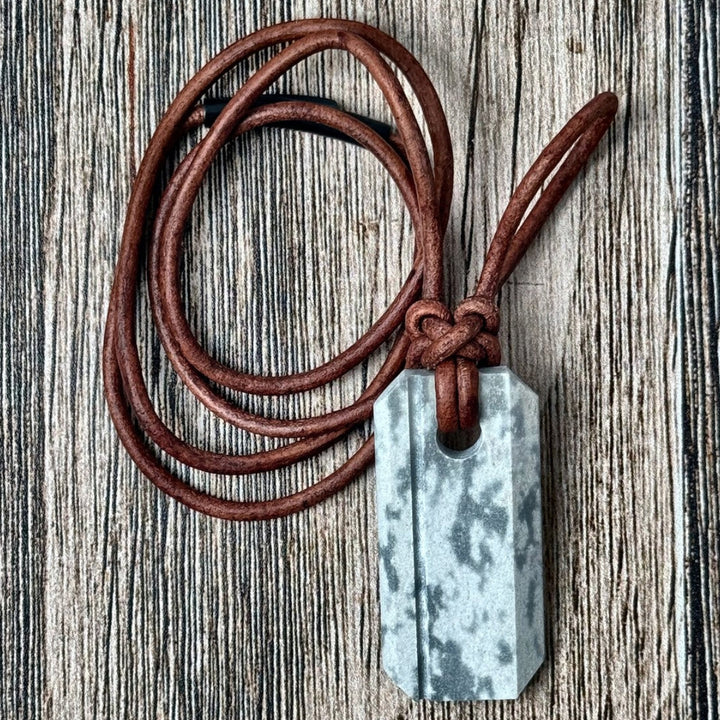
The Wazoo Viking Whetstone Pendant is the most charming sharpener we sell — a real, functional sharpening stone you wear on a paracord around your neck. It's not a primary sharpener, but it's the kind of tool that's there when nothing else is, and it's tough enough to take a beating.
If you're the type to keep a knife on you at all times, this is a worthy companion. Touch up the edge in the field, on a hike, or anywhere a stone wouldn't normally come along.
Best for: Outdoors carry, hikers, and anyone who appreciates form-meets-function gear.
How to Sharpen a Pocket Knife: Step by Step
Once you have a sharpener, the process is simple. The biggest mistake new sharpeners make is overthinking it. Here's the no-nonsense version.
Step 1: Pick Your Angle
Most EDC knives sharpen well at 20 degrees per side. If you've never sharpened before, stack two quarters under the spine of the blade — that's roughly 17 degrees on most pocket knives, close enough. The exact number matters less than keeping the angle consistent through every pass.
Step 2: Start with the Coarse Side
Place the heel of the blade on the stone at your chosen angle. Push the blade across the stone in a sweeping motion, as if you were trying to slice a thin layer off the top. Lead with the edge. Move from heel to tip in one smooth pass.
Do 8–10 passes per side, alternating sides. You'll start to feel a tiny burr — a fine wire of steel — forming on the opposite side of the edge. That's the goal of the coarse stage.
Step 3: Move to the Fine Side
Flip the stone (or switch to your fine stone) and repeat the process with lighter pressure. The fine side refines the edge and removes the burr. 10–15 passes per side, alternating, with progressively lighter pressure.
Step 4: Strop or Hone
If you have a leather strop or a ceramic rod, finish with 10–15 stropping passes per side. This removes any remaining burr and aligns the edge to its sharpest possible state. If you don't have a strop, a clean piece of denim or the back of a leather belt works in a pinch.
Step 5: Test the Edge
The two best EDC sharpness tests:
- Paper test: Hold a sheet of printer paper vertically and slice down through it. A sharp knife glides; a dull knife tears.
- Thumbnail test: Lightly drag the edge across your thumbnail (carefully). A sharp edge bites in. A dull edge skates.
Skip the "shaving arm hair" test unless you want to look like you lost a fight with a weed whacker.
How Often Should You Sharpen Your EDC Knife?
It depends on how hard you use it. A few honest benchmarks:
- Light use (opening packages, light cutting): A quick strop or ceramic touch-up every 2–3 weeks. Full sharpening 2–3 times per year.
- Moderate use (daily cardboard, rope, food prep): Touch-up weekly. Full sharpening every 1–2 months.
- Heavy use (work, outdoor, fishing/hunting): Touch-up every few days. Full sharpening as needed.
The honest truth is that most people don't sharpen often enough — they wait until the knife is fully dull and then dread it. The trick is to touch up early and often. A knife that gets a 60-second strop every week or two will basically never go truly dull.
Common Sharpening Mistakes
Mistake #1: Inconsistent angle. The number-one cause of a knife that won't get sharp. If your hand wobbles, the edge rounds over instead of meeting at a clean apex. Use a guide, stack quarters, or focus on holding the angle steady.
Mistake #2: Too much pressure. Sharpening is a slicing motion, not a grinding one. Let the abrasive do the work. Heavy pressure produces a bigger burr, more heat, and a worse edge.
Mistake #3: Skipping the burr check. If you don't form a burr on the coarse stage, you haven't sharpened all the way to the apex. Run your fingernail (carefully) perpendicular to the edge — you should feel the burr catch. No burr means keep going.
Mistake #4: Using a pull-through sharpener. Cheap V-shaped pull-throughs are the worst thing that can happen to a quality knife. They tear steel, set unpredictable angles, and ruin edge geometry. Throw them out.
Keeping Your Knife in Top Shape Between Sharpenings
Sharpening is only half the battle. Three habits will keep your blade sharp longer:
- Wipe it down after use. Moisture and acidic foods (citrus, tomatoes) corrode steel and dull edges. Dry the blade after every use.
- Oil the pivot occasionally. A drop of light oil every few months keeps the action smooth and prevents wear on the edge from awkward deployment.
- Strop more, sharpen less. A 60-second strop on the back of a leather belt brings most edges back without removing any meaningful steel. The less you grind, the longer the knife lasts.
FAQ: Pocket Knife Sharpening, Answered
Q: Can I sharpen a serrated knife on a flat stone?
No. Serrations need a tapered ceramic or diamond rod that fits inside each scallop. The CRKT Knife Maintenance Tool's diamond rod handles serrations well.
Q: Do I need a different sharpener for different steels?
For most EDC steels (8Cr14MoV, D2, 154CM, S35VN, 14C28N), a diamond plate or quality water stone handles everything. Super-hard premium steels (M390, MagnaCut, S110V) cut faster on diamond. Avoid cheap aluminum oxide stones for high-end steels — they'll just glaze over.
Q: Is a guided sharpener better than freehand?
Guided sharpeners (Lansky, Wicked Edge style) deliver more consistent results for beginners. Freehand sharpening is faster, more portable, and what most enthusiasts settle on. Start guided if angle consistency is your problem; go freehand once you trust your hand.
Q: How sharp should my EDC knife be?
Sharp enough to cleanly slice printer paper without tearing. That's working sharp. Anything beyond that is a bonus. You don't need a scalpel to open Amazon boxes.
Q: Will sharpening void my knife's warranty?
No. Manufacturer warranties cover defects in materials and workmanship — sharpening (and the wear that comes with it) is normal use. Some brands like Spyderco and Benchmade even offer free factory sharpening for life.
Final Take: A Sharp Knife Is the Whole Point
You can carry the most expensive pocket knife on the market, but if it's dull, it's just a paperweight with a clip. Learning to sharpen — even at the most basic level — is what separates someone who owns a knife from someone who actually carries one.
If you want our honest one-pick recommendation: start with the DMT Double Sided Diafold Sharpener. It's the right tool for 90% of EDC sharpening jobs, it'll outlive your favorite knife, and it folds up small enough to live in a drawer or a backpack. Once you're comfortable, add the Pride Abrasive 1000 Grit Water Stone for a polished finish.
Browse our full EDC Accessories collection for sharpeners, maintenance tools, and the rest of the gear that keeps your pocket carry running. Need a knife to sharpen first? Take a look at our Pocket Knives collection — every blade we sell ships free in the U.S., typically dispatches the same day when ordered before 5 PM Eastern, and comes with our 30-day satisfaction guarantee.
About the Author: Written by the team at Mighty Oak Supply Co., a family-owned EDC retailer based in New Jersey. We carry the gear we believe in — and we're happy to talk you out of stuff you don't need.
Shop the picks
Four in-stock sharpening and maintenance tools already discussed by the guide. Shop each product on its product page.
Pride Abrasive 1000 Grit Water Stone Sharpening Stone
A bench water stone for controlled sharpening.