
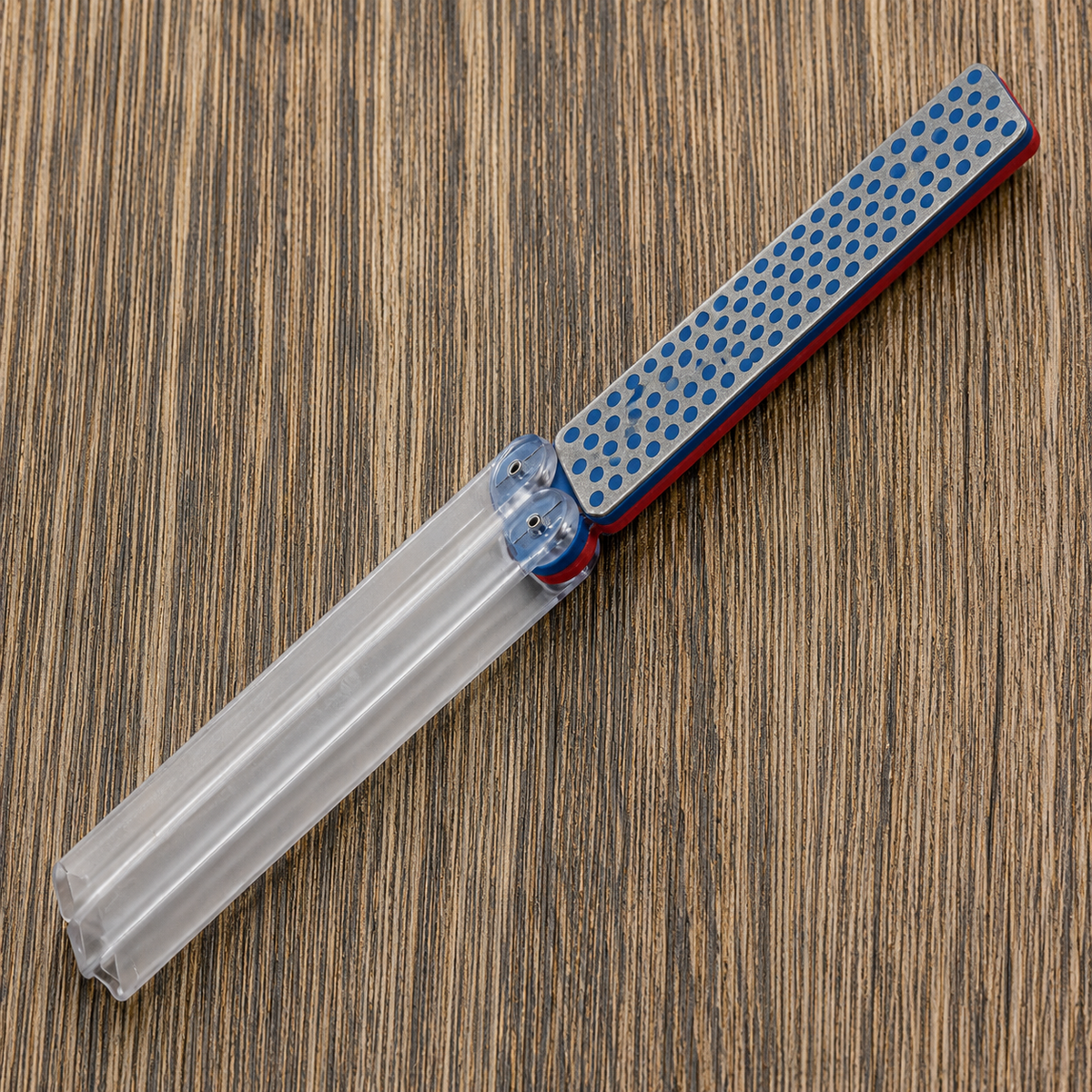
A diamond sharpener is a practical choice when you want little setup and no routine stone flattening. A water stone makes sense when you prefer sharpening at a bench and are willing to manage water, cleanup, and surface maintenance. Neither material automatically produces a sharper knife. The abrasive grade, the condition of the edge, and your control of the sharpening angle all matter.
For a concrete EDC comparison, we will look at two different formats: a folding DMT Fine/Coarse Diafold and a full-size Pride Abrasive 1000-grit water stone. One packs away in a small kit; the other gives you a broad working surface at home. Those size differences belong to these products, not to every diamond sharpener or water stone.
Diamond sharpener vs. water stone at a glance
| Decision | DMT Fine/Coarse Diafold | Pride 1000-grit water stone |
|---|---|---|
| Abrasive | Diamond sharpening surfaces | Bonded aluminum oxide water stone |
| Grades supplied | Coarse and fine | One 1000-grit surface grade |
| Preparation | Use dry or with water; no soaking | Prepare with water; follow the stone’s soaking instructions |
| Working format | Narrow folding sharpener | Broad rectangular bench stone |
| Surface upkeep | Clean and dry; no routine flattening | Clean, dry appropriately, and flatten as needed |
| Main reason to choose it | Compact storage and two grades in one tool | More room for controlled strokes at a bench |
Product details come from DMT’s Diafold specifications, Pride Abrasive’s water-stone information, and the exact Mighty Oak listings linked below. This is a comparison of their designs and care requirements, not a timed sharpening test.
Choose a diamond sharpener for less setup
The DMT Double Sided Diafold Sharpener - Fine/Coarse combines two diamond grades in a folding tool. DMT identifies the coarse side as 45 microns / 325 mesh and the fine side as 25 microns / 600 mesh. Its handles cover the abrasive surfaces for storage, and the manufacturer lists a closed length of 5 inches.
That format is useful if your sharpener moves between a drawer, work bag, and camping kit. You can use it without arranging a soaking container or a permanent bench station. DMT permits dry sharpening or water lubrication; oil is unnecessary.
The tradeoff is working space
A small folding sharpener asks you to control the blade over a narrower surface. If you are learning freehand sharpening and want more room to follow the edge from heel to tip, consider the physical size before choosing solely by abrasive material. Diamond bench stones also exist, so portability is a feature of this Diafold rather than a requirement of diamond sharpening.
Low maintenance still means maintenance
DMT recommends light pressure, cleaning with water after use, and dry storage. It also notes that a new surface becomes less aggressive during its initial break-in. A change in feel after the first few uses does not by itself mean the sharpener is worn out. See DMT’s care FAQ for cleaning and troubleshooting guidance.
Choose a water stone for a bench routine
The Pride Abrasive 1000 Grit Water Stone Sharpening Stone is a different kind of tool to live with. Mighty Oak’s listing specifies an 8 × 2.75 × 1-inch stone. That broad surface is worth considering if you want to set up in one place, support the stone securely, and practice repeatable strokes.
Pride makes its water stones with aluminum oxide abrasive. The linked product is a single 1000-grit stone, not a combination stone with a second coarse side. Choose it around routine sharpening at home rather than expecting one grade to cover every repair and finishing task.
Account for water and flattening
A water stone needs a suitable wet-work area, secure support, and somewhere to dry afterward. Follow the instructions for your exact stone: soaking and storage requirements vary, so a preparation time quoted for another brand is not a universal rule.
Water stones can wear unevenly, leaving a hollow or “dish” where you work most. Check flatness and restore the surface when needed. Norton’s water-stone care guide explains why flattening is part of ownership. Include an appropriate flattening tool in your setup rather than treating the stone as maintenance-free.
Do not choose by the grit number alone
A larger number is not a sharpness score. DMT’s mesh figures and a water stone’s grit label describe abrasive grades; they do not promise that one finished edge will outperform another. Avoid building a mixed-brand progression just by sorting the numbers on the boxes.
- For a slightly dulled edge: start with an appropriate maintenance grade instead of automatically removing metal with your coarsest option.
- For damage or a major angle change: a more aggressive repair stage may be needed. Neither the word “fine” nor a high grit number makes that work easier.
- For a finer finish: refine an already formed edge. Moving to a finer abrasive does not fix an edge you have not successfully sharpened.
Think of a 1000-grit water stone as a sharpening stage, not an automatic mirror-polish finish. For example, Norton’s water-stone system places 1000 grit at the initial cutting stage and uses higher grades for finishing and polishing. Exact results still depend on the stone and technique.
Whichever format you choose, begin with the knife maker’s guidance and work on maintaining a consistent angle. Our blade-grind guide explains the difference between the blade’s main grind and its edge bevel.
Questions before buying
Can I use the Diafold to flatten the water stone?
Do not buy this pair expecting the folding sharpener to double as a lapping plate. DMT recommends its purpose-built Dia-Flat products for flattening and warns that using other sharpeners for that work can wear them out. Choose a flattening method approved for your water stone.
Do diamond sharpeners last forever?
No. DMT says service life depends on use and care. Cleaning and dry storage matter, but they do not make the abrasive surface permanent. A water stone also wears as you use and flatten it; neither option has an unlimited working life.
Do I need both?
Not to get started. Choose the format that fits where you will actually sharpen. Add another tool only when you can identify a missing job, such as a repair grade or more bench space. These two products can serve different locations, but buying both does not automatically create the ideal grit progression.
Between sharpening sessions, keep adhesive, debris, and moisture off the blade. Our pocket-knife maintenance guide covers the rest of the care routine.
Choose the setup you will use
Start with the folding DMT if compact storage and quick setup are your priorities. Choose the Pride water stone if you want a broad bench surface and accept the extra preparation and upkeep. For either choice, a manageable routine and consistent technique matter more than collecting extra grits.
Shop the picks
The folding diamond sharpener and bench water stone compared in this guide.

