Blade shape is one of the most important—and most misunderstood—choices on a pocket knife. Steel determines how the edge behaves, and the lock determines how the folder operates, but the blade's profile decides how naturally it slices, pierces, opens packages, trims material, and handles controlled work.
The right answer is not the most aggressive-looking shape or the one with the longest list of claimed advantages. It is the profile that matches the cuts you make most often. This guide compares the most common pocket knife blade shapes, explains their real tradeoffs, and points to practical examples from our pocket knife collection.
Quick Answer: Which Pocket Knife Blade Shape Is Best?
- Best all-around EDC shape: Drop point
- Best for controlled piercing and outdoor work: Clip point
- Best for boxes, draw cuts, and daily utility: Sheepsfoot or Wharncliffe
- Best for a strong forward geometry and scraping cuts: Tanto
- Best for balanced piercing and a centered tip: Spear point
- Best for maximum cutting belly: Trailing point
- Best for pulling through cord, webbing, or vegetation: Hawkbill
For most people buying one everyday knife, a drop point is the safest recommendation. It offers useful belly, a controllable tip, and enough strength for ordinary daily work. But if most of your cutting involves cardboard, packages, cord, and opening materials on a flat surface, a sheepsfoot or Wharncliffe may be even more practical.
What Actually Changes When the Blade Shape Changes?
A blade profile changes three functional areas: the tip, the belly, and the straight portion of the edge. A fine tip excels at precision and piercing but is easier to damage if misused. More belly creates a longer curved edge for slicing. A long straight edge makes it easier to keep steady contact with cardboard, straps, and flat work surfaces.
Blade shape is only part of the system. Thickness behind the edge, blade stock, grind, heat treatment, and steel all affect performance. A thick drop point can cut very differently from a thin one. Before buying, pair this guide with our pocket knife steel guide and knife lock guide for the complete picture.
Drop Point: The Best All-Around EDC Blade Shape
A drop point has a spine that curves downward toward the tip. That places the point lower than the spine and leaves more material behind it than you would find on many clip-point designs. The result is a useful balance of tip control, durability, and slicing belly.
Drop points work well for opening packages, cutting cord, food preparation, light outdoor chores, and the ordinary jobs that make up most everyday carry. Their broad belly helps with slicing, while the tip remains precise enough for controlled detail work. They are rarely the absolute best at one specialized job, but they are good at almost everything.
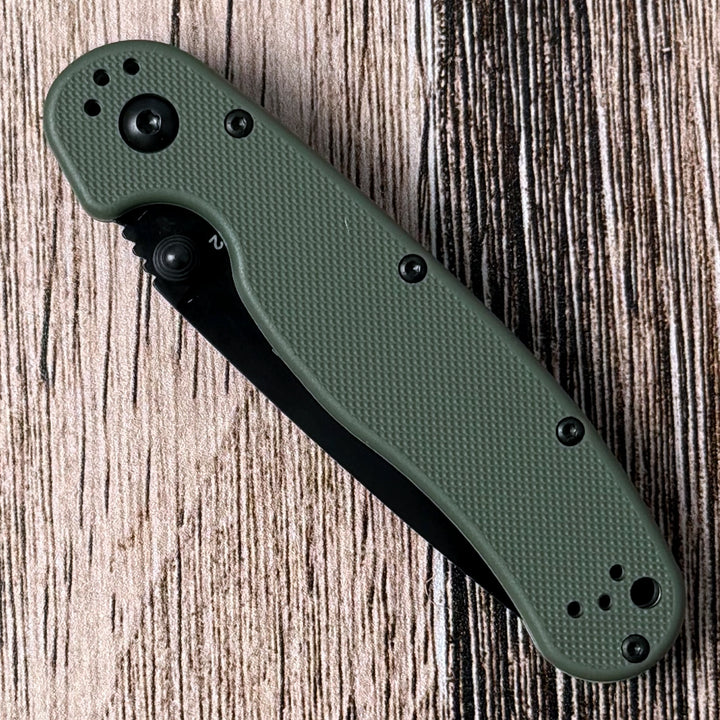
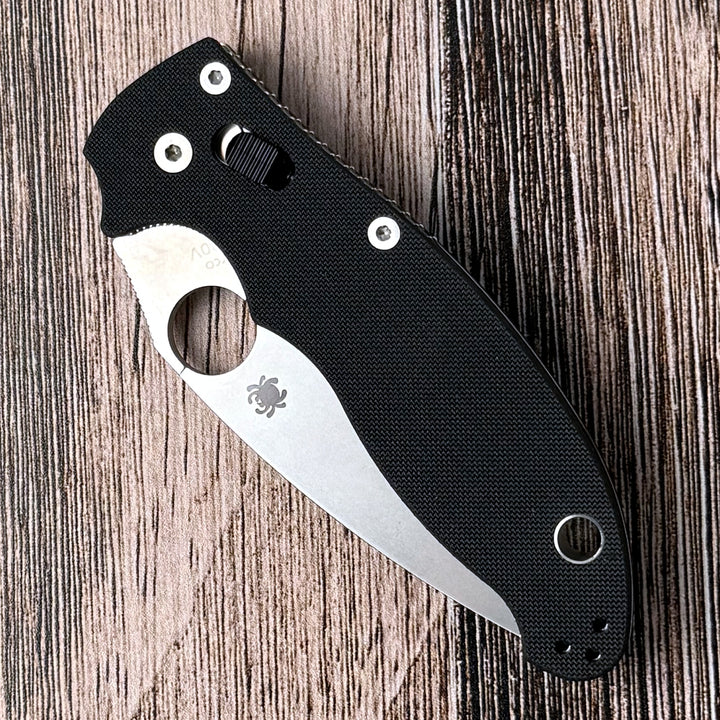
The Ontario RAT II is a straightforward example: a compact 3-inch drop-point blade in a practical, pocket-friendly design. The Spyderco Manix 2 uses a broader leaf-shaped interpretation of the drop point, trading a little visual simplicity for excellent cutting geometry and hand control.
Choose a drop point if: you want one knife for mixed daily tasks and do not have a highly specialized use case.
Clip Point: Precise, Proven, and Outdoor-Ready
A clip point looks as if part of the forward spine has been clipped away, either with a straight cut or a shallow curve. This creates a narrow, highly controllable tip and usually preserves plenty of belly for slicing. It is one of the classic hunting and outdoor blade profiles.
Compared with a typical drop point, a clip point generally offers better piercing precision but less material behind the tip. That does not make it fragile in normal use; it simply means the shape rewards proper cutting technique and should not be treated like a pry bar.
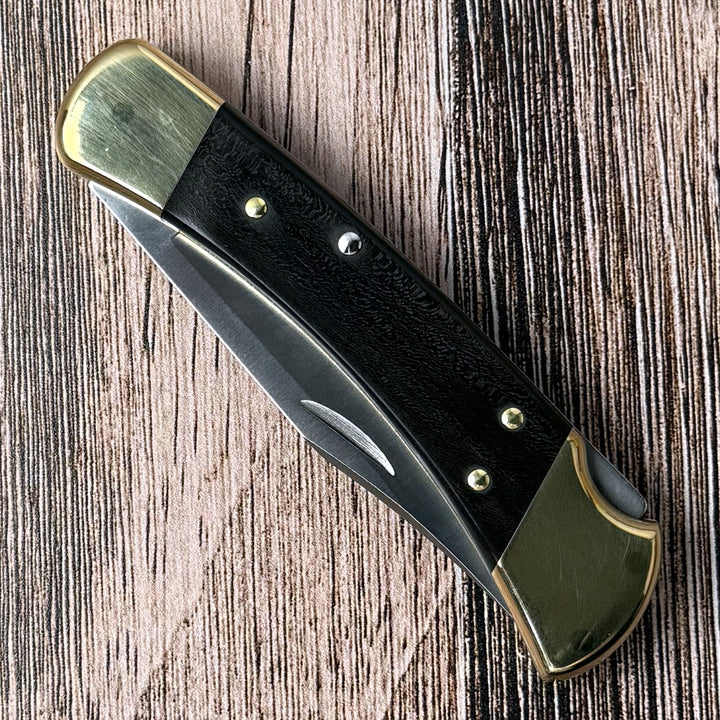
The Buck 110 Hunter is the defining example: its 3.75-inch clip-point blade combines a fine working tip with a sweeping edge suited to outdoor cutting tasks. It is a strong choice for users who value precision, tradition, and a generous slicing belly.
Choose a clip point if: tip control, hunting utility, and detailed cuts matter more than maximum tip reinforcement.
Sheepsfoot: Built for Safe, Controlled Utility Cuts
A sheepsfoot blade pairs a mostly straight cutting edge with a spine that curves downward to meet the edge near the tip. Because the point is subdued, the shape reduces the chance of accidental punctures while keeping the forward part of the edge useful for controlled cuts.
This is an excellent profile for breaking down boxes, opening packages, cutting cord, trimming material, and making draw cuts. The straight edge stays engaged with the material, and the low tip gives you excellent control. The tradeoff is reduced piercing ability compared with a drop point or clip point.
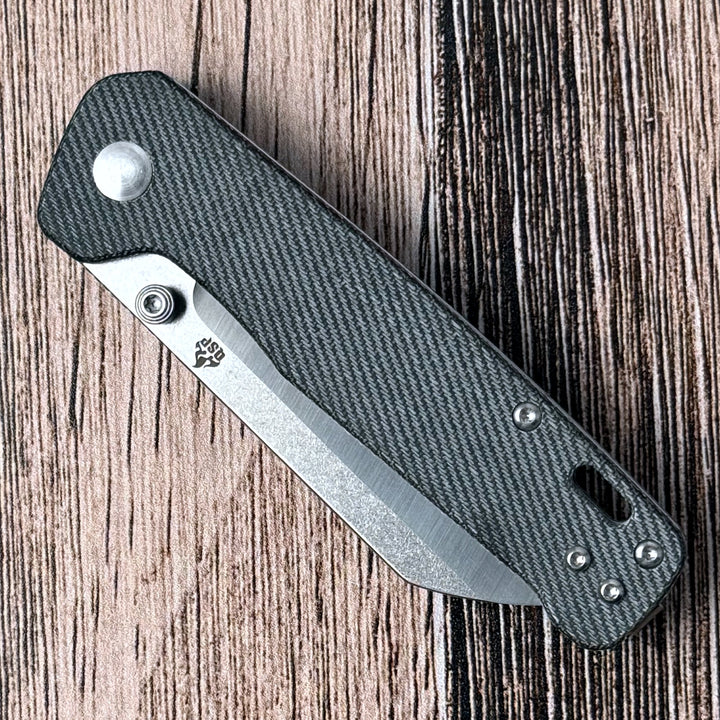
The QSP Penguin V2 shows why the shape has become so popular in modern EDC. Its 3-inch sheepsfoot blade is purpose-built for the repetitive utility work that pocket knives actually perform most often.
Choose a sheepsfoot if: your knife spends most of its time opening boxes, cutting straps, working around people or gear, and making precise utility cuts.
Wharncliffe: Straight-Edge Control With a Finer Tip
Wharncliffe and sheepsfoot blades are often confused because both use a long, straight edge and a descending spine. The practical difference is the tip. A traditional Wharncliffe spine tapers more gradually into a finer, more acute point, while a sheepsfoot usually has a rounder, less aggressive nose.
That fine tip makes the Wharncliffe excellent for scoring, opening packages, detailed cuts, and reaching into tight spaces. The straight edge transfers pressure efficiently and is easy to guide. In exchange, its tip deserves more care than the blunter end of a sheepsfoot.
Choose a Wharncliffe if: you want the utility of a straight edge but still need a precise tip for detailed work.
Tanto: Strong Forward Geometry With Two Cutting Edges
The modern American tanto has a straight main edge that meets a sharply angled front edge, creating a distinct secondary point. The reinforced-looking front geometry is well suited to push cuts, scraping, and work where the forward edge takes concentrated pressure.
Tantos are popular on tactical-style knives, but the shape has real utility beyond appearance. The secondary point can open stubborn packaging, and the straight edges are easy to guide. The tradeoffs are a smaller slicing belly and more work during sharpening because two edge sections must be maintained separately.
A tanto tip is not indestructible, and a folding knife is still not a pry bar. Actual durability depends on blade thickness, grind, steel, heat treatment, and how the knife is used.
Choose a tanto if: you prefer straight-edge cutting, scraping utility, and robust forward geometry over smooth, sweeping slices.
Spear Point: A Centered Tip and Balanced Profile
A spear-point blade has a tip aligned near the centerline, with the spine and edge curving toward it in a roughly symmetrical profile. On a pocket knife, the spine is normally unsharpened even when the shape resembles a double-edged blade.
The centered point gives good control and efficient piercing, while the balanced shape can still provide enough belly for everyday slicing. Spear points are versatile, though they usually give up some belly compared with a drop point and some tip reinforcement compared with thicker utility-focused profiles.
Choose a spear point if: you want balanced handling, a centered tip, and clean symmetry.
Leaf-Shaped Blade: Broad, Ergonomic, and Efficient
A leaf-shaped blade widens through the middle and tapers toward the tip with curves on both the spine and cutting edge. It is closely related to the drop point in function, but the broader profile can create a comfortable thumb ramp, a long slicing edge, and a useful balance between tip control and strength.
The Spyderco Manix 2 is a strong example. Its leaf-shaped drop-point blade provides plenty of cutting belly and a practical point without feeling delicate.
Choose a leaf-shaped blade if: you like drop-point versatility but want a broader blade with strong ergonomics and slicing performance.
Trailing Point and Hawkbill: Specialized Shapes for Specialized Work
Trailing Point
A trailing-point blade sweeps upward so the tip sits above the spine. This creates a long belly and excellent slicing performance, especially for skinning and food preparation. The high, fine tip is less suited to rough daily utility, so trailing points make more sense when slicing ability is the priority.
Hawkbill
A hawkbill curves downward like a talon. The concave edge pulls material into the cut instead of letting it slip away, making the shape effective for rope, webbing, carpet, vegetation, and similar fibrous materials. That same curve makes ordinary flat-surface cutting and sharpening less convenient.
Choose one of these shapes if: you have a recurring job that benefits from its geometry. For general EDC, a drop point, sheepsfoot, or Wharncliffe is usually easier to live with.
Which Blade Shape Is Easiest to Sharpen?
Simple straight edges are generally easiest to sharpen consistently. Sheepsfoot and Wharncliffe blades give the stone a predictable path, while drop points and clip points require you to follow the curve and lift slightly as you approach the tip. Tantos are not necessarily difficult, but each edge section should be sharpened independently so you do not round off the secondary point. Hawkbills usually require narrow rods or specialized stones that can reach the concave edge.
Whatever shape you choose, technique matters more than speed. Our complete pocket knife sharpening guide covers angles, abrasives, burr formation, and the mistakes most likely to damage a good edge.
How to Choose the Right Blade Shape for Your EDC
Start with the work, not the knife. Think through your last ten real cutting tasks. If most were packages, cardboard, cord, and controlled draw cuts, choose a sheepsfoot or Wharncliffe. If they were a mix of slicing and detail work, choose a drop point. If you regularly use the tip for precise outdoor work, a clip point earns consideration. Choose a tanto, trailing point, or hawkbill when their specialized geometry solves a problem you actually have.
Then check the rest of the knife: blade length, edge geometry, steel, handle, opening method, lock, pocket clip, weight, and local carry rules. Shape alone cannot rescue a knife that is too large, uncomfortable, or inconvenient to carry. New to the category? Our first EDC knife guide walks through the whole decision.
Pocket Knife Blade Shape FAQ
What is the most versatile pocket knife blade shape?
For most users, it is the drop point. It combines useful belly, solid tip control, and enough durability for normal everyday cutting without becoming overly specialized.
Is a sheepsfoot better than a drop point for EDC?
It can be. A sheepsfoot is often better for packages, cardboard, straps, and controlled utility cuts. A drop point is better when you also need a more capable piercing tip and a rounded belly for slicing.
What is the difference between a sheepsfoot and a Wharncliffe?
Both typically have straight cutting edges. A sheepsfoot has a rounder, more subdued tip, while a Wharncliffe tapers into a finer point. The sheepsfoot prioritizes controlled utility and reduced accidental piercing; the Wharncliffe adds more precision.
Are tanto blades hard to sharpen?
Not if you treat the main edge and front edge as two separate sections. The common mistake is sweeping across the transition and rounding off the secondary point.
Does blade shape matter more than blade steel?
They solve different problems. Shape determines how the knife meets the material; steel influences edge retention, toughness, corrosion resistance, and ease of sharpening. For actual cutting performance, geometry and sharpness often matter more than buying the most expensive steel.
Find the Blade Shape That Fits Your Work
There is no universally best blade shape. There is only the shape that fits your most common cuts with the fewest compromises. Start with a drop point for broad versatility, a sheepsfoot or Wharncliffe for pure utility, or a clip point for precise outdoor work. Move to a specialized profile only when you can name the job it does better.
Compare current options in our pocket knife collection, or see our best EDC pocket knives of 2026 for a broader buying shortlist. Every U.S. order ships free and is backed by our 30-day satisfaction guarantee.
Shop the picks
Four in-stock knives from the guide that make common blade shapes easier to compare.