For most everyday-carry users, the practical starting point is a folding knife with a blade around 3 to 3.5 inches, a closed length near 4 to 4.75 inches, and a weight you will actually carry every day. Those are guidelines, not universal rules. A knife's handle shape, thickness, pocket clip, and weight can matter as much as blade length.
That is why choosing the right pocket knife size is less about finding one perfect number and more about matching the whole package to your hand, pocket, daily tasks, and local rules. This guide explains what the common measurements mean, how different sizes carry, and how to compare real knives without getting distracted by a single specification.
Pocket Knife Sizes at a Glance
There is no official industry standard for "small," "medium," or "large" pocket knives. The ranges below are practical shopping categories:
| Size category | Typical blade length | Typical closed length | Best suited for |
|---|---|---|---|
| Compact | Under 3 inches | Usually under 4 inches | Light utility, small pockets, discreet carry |
| General-purpose EDC | About 3 to 3.5 inches | About 4 to 4.75 inches | Packages, cord, food, household tasks, daily utility |
| Full-size | Over 3.5 inches | Often over 4.75 inches | Outdoor work, larger hands, demanding cuts, sheath carry |
These ranges help narrow the field, but they do not predict how a knife will feel in your pocket. Two knives with the same blade length can have completely different weights, handle shapes, and carry profiles.
The Six Measurements That Actually Determine Pocket Knife Size
1. Blade length
Blade length is the measurement shoppers notice first. It affects cutting reach, the amount of edge available, and sometimes whether the knife is lawful to carry in a particular place. It does not tell you the knife's full cutting ability, pocket footprint, or comfort.
2. Cutting-edge length
The sharpened edge may be shorter than the blade's listed length because of a choil, ricasso, or unusual blade geometry. If you regularly make long slicing cuts, usable edge can be more informative than the headline measurement. Blade profile matters too; our pocket knife blade-shape guide explains how drop points, clip points, tantos, sheepsfoot blades, and other profiles change performance.
3. Closed length
Closed length tells you how much vertical space the folded knife occupies. A long, narrow knife may disappear along the edge of a pocket, while a shorter but wider knife can crowd keys, a phone, or a wallet.
4. Handle thickness and width
This is where many online comparisons fall apart. Contoured scales, broad handles, finger choils, and protruding clips all add pocket presence. More handle volume can improve control during hard use, but it also takes up more room.
5. Weight
Weight changes whether a knife feels like a daily companion or a piece of equipment. Very light knives are easy to forget in the pocket. Heavier knives can feel reassuring in the hand, but may pull on light pants or become annoying during long days.
6. Pocket clip and carry position
A deep-carry clip, tip-up or tip-down orientation, clip tension, and the amount of handle left above the pocket all affect real-world carry. A well-designed clip can make a relatively long knife feel unobtrusive. A bulky clip can make a smaller knife snag or print against clothing.
How Blade Length Changes Everyday Use
Under 3 inches: compact and easy to control
Compact blades work well for opening packages, trimming loose material, cutting tags, and other precise jobs. They are often easier to carry in dress clothes or crowded pockets. The tradeoff is less cutting reach and usually a shorter handle, which may not suit large hands or gloves.
About 3 to 3.5 inches: the EDC sweet spot
This range gives most users enough edge for common daily work without automatically creating an oversized knife. It includes everything from narrow executive folders to broad, hand-filling work knives. The category is useful, but it is still too wide to buy from blade length alone.
Over 3.5 inches: more reach, more commitment
Larger blades can help with food preparation, outdoor jobs, and long slicing cuts. They also tend to come with longer handles and more overall mass. Before choosing one, decide whether it will live comfortably in your pocket or makes more sense in a belt sheath, pack, or work kit.
Real-World Size Comparison: Five Pocket Knives
The current Mighty Oak pocket knife collection shows why blade length is only one part of the decision:
| Knife | Blade | Closed | Weight | Carry character |
|---|---|---|---|---|
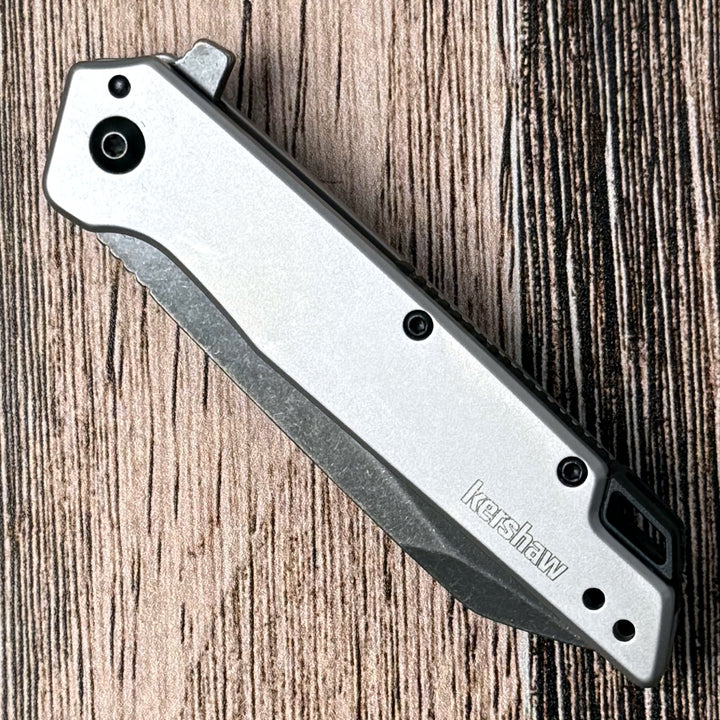
| Kershaw Misdirect | 3.00 in. | 4.00 in. | 3.84 oz. | Compact dimensions with solid stainless-steel construction |
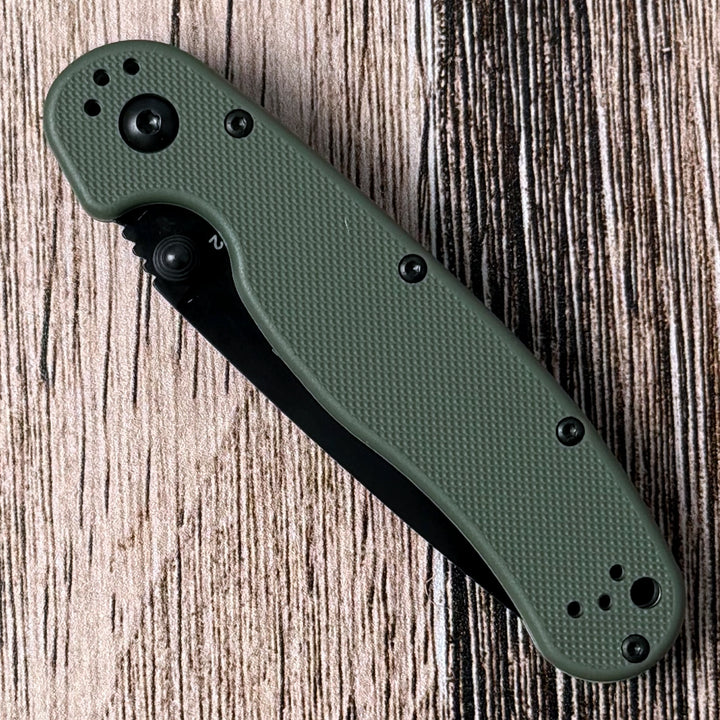
| Ontario RAT II | 3.00 in. | 4.00 in. | 2.8 oz. | Light, practical general-purpose EDC |
| CRKT CEO | 3.38 in. | 4.38 in. | 2.1 oz. | Long, narrow, deep-carry profile for discreet use |
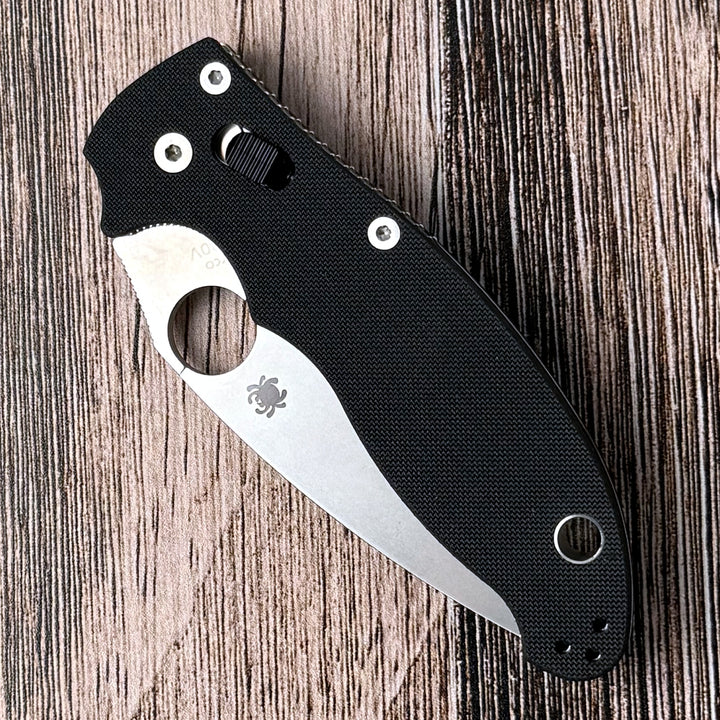
| Spyderco Manix 2 | 3.38 in. | 4.63 in. | 5.76 oz. | Broad, hand-filling work knife with substantial grip |
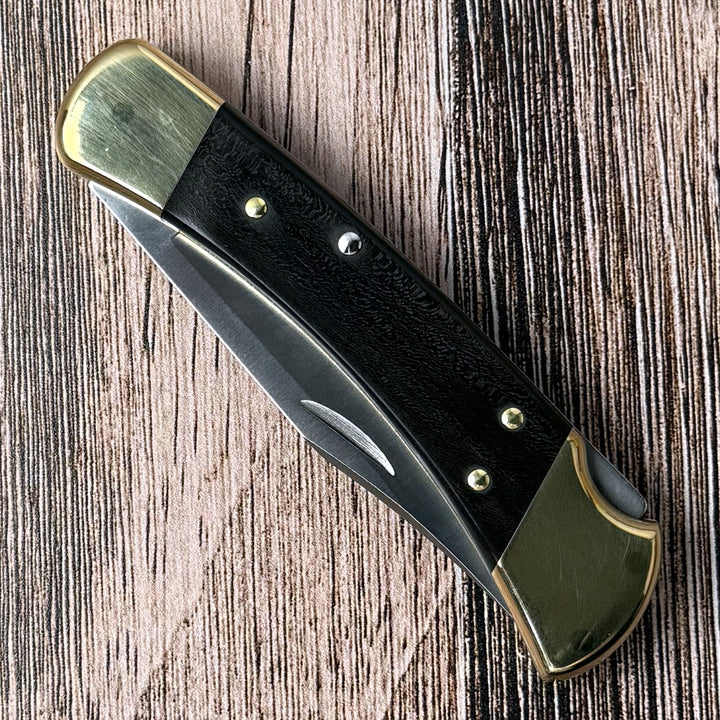
| Buck 110 Hunter | 3.75 in. | 4.875 in. | 7.2 oz. | Classic full-size folder designed around its included belt sheath |
The clearest comparison is the CRKT CEO and Spyderco Manix 2. Both list a 3.38-inch blade, but the CEO weighs 2.1 ounces and emphasizes a slim, pen-like profile. The Manix 2 weighs 5.76 ounces and uses a broader handle designed for a secure, substantial grip. Neither is "the right size" in isolation; each solves a different carry problem.
The same lesson appears at 3 inches. The Ontario RAT II and Kershaw Misdirect share the same listed blade and closed lengths, yet differ by more than an ounce and use different handle materials, opening mechanisms, and locks. Read the whole specification sheet.
Choose a Pocket Knife Size by Use Case
Office and discreet carry
Prioritize low weight, a narrow handle, a restrained appearance, and a clip that keeps the knife from dominating your pocket. A long but slim folder can carry more discreetly than a shorter, wider one. The CRKT CEO is a good example: its blade is not especially short, but its overall design is intentionally pen-like.
General everyday carry
For packages, cord, light food work, and ordinary household tasks, start around the 3-to-3.5-inch blade range. Then compare closed length, weight, and grip comfort. The Ontario RAT II is a useful benchmark for a light 3-inch folder, while broader models trade a little more pocket space for hand-filling ergonomics.
Trade work and outdoor use
Grip security, handle length, lock design, and blade stock become more important when cuts are longer or the knife is used with gloves. A larger knife may be appropriate, but size does not replace good technique or the right tool. For jobs that involve prying, chopping, or high lateral force, use a purpose-built tool instead of treating a folder as indestructible.
Larger hands or gloves
Do not force yourself into a compact knife because a chart calls it ideal for EDC. A handle that allows a secure four-finger grip may be safer and more comfortable than the smallest knife you can fit in a pocket. Pay attention to usable handle length, finger grooves, choils, and how the clip contacts your palm.
Pocket Knife Laws: Check Before You Buy or Carry
Knife laws are not uniform. Rules can depend on blade length, opening mechanism, lock type, location, manner of carry, and intended use. State law may not be the only rule that applies; cities, schools, workplaces, courthouses, and other restricted locations can have separate requirements.
Do not treat a product category or online size chart as legal advice. Check the current law where you live and wherever you plan to carry. If you travel, review the rules at your destination rather than assuming your home rules follow you. Our EDC air-travel guide covers the separate practical issue of packing knives and other carry gear for a flight.
Common Pocket Knife Sizing Mistakes
- Buying by blade length alone. Weight, width, thickness, and clip design determine how a knife actually carries.
- Assuming smaller is always more discreet. A slim, deep-carry knife can disappear better than a shorter but much wider folder.
- Assuming lighter is always better. Low weight is convenient, but some users prefer the control and balance of a more substantial handle.
- Choosing the biggest knife just in case. Extra size only helps if it serves a task you really perform and remains comfortable enough to carry.
- Ignoring the open knife's ergonomics. Pocket comfort matters, but so do grip security, reach to the lock, and control of the cutting edge.
- Forgetting non-negotiable rules. Check local law and workplace policy before falling in love with a particular model.
A Simple Five-Step Pocket Knife Size Test
- Set the hard limits. Identify applicable laws, workplace rules, and any maximum size you are comfortable carrying.
- Define the 90-percent job. Choose for what you do most often, not the most extreme hypothetical task.
- Choose your carry location. Front pocket, fifth pocket, jacket, belt sheath, and pack carry all favor different dimensions.
- Compare the complete specifications. Look at blade length, closed length, weight, handle shape, thickness, opening method, lock, and clip.
- Prefer control over excess. The right knife is large enough to grip and use confidently, but compact enough that you will keep it with you.
If this is your first folder, pair this guide with our beginner's guide to choosing an EDC knife. Then use the pocket knife steel guide and knife-lock guide to narrow the technical details after you know the size class you want.
Frequently Asked Questions
What is the best pocket knife size for everyday carry?
For many users, a blade around 3 to 3.5 inches offers a practical balance of cutting ability and portability. Treat that as a starting point. Your hand size, normal tasks, clothing, local rules, and preferred carry position can justify something smaller or larger.
Is a 3-inch pocket knife big enough?
A 3-inch blade is enough for most routine EDC jobs, including opening packages, cutting cord, trimming material, and light food tasks. Handle comfort and usable edge matter more than chasing an extra fraction of an inch.
Is a lighter pocket knife always more comfortable?
Not always. A lighter knife is less noticeable in the pocket, but a heavier or broader handle may feel more secure during demanding work. Compare carry comfort and working comfort separately.
How much should an EDC knife weigh?
There is no universal ideal. Around 2 to 4 ounces feels unobtrusive to many people, while larger work-oriented folders often weigh more. Your clothing and carry position matter: five ounces on a belt or in work pants may feel normal, while the same knife may be annoying in lightweight shorts.
Does a longer blade always mean a bigger knife?
No. The CRKT CEO and Spyderco Manix 2 in the comparison above have the same listed blade length but very different weights and handle profiles. Closed length, width, thickness, and design determine the knife's real footprint.
Final Recommendation
Start with your legal and practical constraints, then evaluate the complete knife instead of one number. A 3-to-3.5-inch blade is a sensible general-purpose starting range, but the best pocket knife size is the smallest package that gives you a secure grip, enough cutting edge for your normal tasks, and a carry profile you will not leave at home.
Browse the current pocket knife collection and compare blade length, closed length, weight, handle shape, lock, and clip side by side. Reliable everyday carry starts with choosing the tool you will actually carry.
Shop the picks
Four in-stock knives from the guide spanning compact, mid-size, larger, and traditional carry.